書單:
月初時讀完了《恆毅力》,如果有讀過《刻意練習》,對於「恆毅力」的概念不會陌生。但《刻意練習》我認為比較強調方法,而《恆毅力》則是強調心態,對於自我要求極高,對於「成功」抱持極大的野心,這樣的人才有機會是個具有恆毅力的人。
At the beginning of the month, I finished reading “Grit". If you have read “Peak: Secrets from the New Science of Expertise", you will not be unfamiliar with the concept of “grit". However, I think that “Peak: Secrets from the New Science of Expertise" emphasizes more on the methods, while “Grit" emphasizes on the mindset. It requires a high level of self-demand and a great ambition for success in order to become a person with grit.
而且作者認為「興趣是因長時間用心培養和精進才能成為興趣」,意即若你喜歡從事的活動不能持續精進、獲得外界實質肯定(比賽獲獎等)那麼便不能稱之為興趣。興趣是終將成為生涯成就的活動,而非無關乎成就的閒暇活動。
Moreover, the author believes that “interest is cultivated through long-term dedication and improvement, and it can only become a true interest if it leads to tangible achievements (such as winning competitions)." Interests will eventually become career achievements, rather than leisure activities that have nothing to do with success.
《恆毅力》作者認為每個人對於各項事物都或多或少具有天份,但那只是未來能培養成為「技能」的潛能,若不經一番努力無法成為「技能」,而即使擁有那份技能,距離真正的成功尚遠,還需要更加努力才能達成「成就」。《恆毅力》這本書即是昭告凡人與專家的差異。要從一個擁有天份的業餘者邁向專業之路,得長期付出高質量的努力才有辦法達成。
The author of “Grit" believes that everyone has some talent in various aspects, but that is only the potential to be developed into “skills" in the future. Without effort, it cannot become a “skill". Even if someone possesses that skill, they still need to work harder to achieve “success". This book highlights the difference between ordinary people and experts. To move from an amateur with talent to a professional, one needs to exert long-term, high-quality efforts.
天分×努力=技能
技能×努力=成就
天分×努力×努力=成就Talent x Effort = Skill
Part1 恆毅力被低估的成就必要條件,第三章 努力,雙倍重要
Skill x Effort = Achievement
Talent x Effort x Effort = Achievement
熱情是長期不變的投入(consistency over time),而非投入的熱切程度(intensity)。
Part1 恆毅力被低估的成就必要條件,第四章 你的恆毅力有多高
與友人分享《恆毅力》的相關內容和讀後感後,對於恆毅力表示不以為然的友人推薦我這本書——《讀書別靠意志力:風靡德國的邏輯K書法》。
After sharing the relevant content and my thoughts on “Grit" with a friend who was skeptical about the concept, she recommended a book to me called “Garantiert erfolgreich lernen – Wie Sie Ihre Lese- und Lernfahigkeit steigern" (Guaranteed Successful Learning – How to Improve Your Reading and Learning Ability).
其實這本書和《恆毅力》談的主題不同,但我知道友人想講的是輕鬆學習法,《恆毅力》像是硬生生要人靠著意志力吞下整本教科書,而《讀書別靠意志力》則是教人抓住關鍵和八二法則便能掌握全盤。
While the themes of this book are different from “Grit," I understood that my friend was trying to recommend an easier way to learn. “Grit" can be seen as forcing oneself to swallow an entire textbook through sheer willpower, while “Garantiert erfolgreich lernen" teaches people how to master a subject through key concepts and the 80/20 principle.
這是本讀後讓我哀嘆相見恨晚的一本書,其中的「結構式閱讀」、「結構式圖卡(心智圖)」和「規律的複習」我認為是這本書的精華,有種一窺擅於考試和記憶之人的技巧養成方法之感,同時我也自省原來自己根本從未以正確且有效的方式吸收知識。
This book left me lamenting that I had not discovered it sooner. The highlights for me were “structural reading," “mind maps," and “regular revision." I felt as though I had gained insight into the study and memorization techniques of those who excel in exams. At the same time, I realized that I had never absorbed knowledge in a correct and effective manner.
雖然我以往不知道結構式閱讀,但有趣的是,裡頭提到快速且大量閱讀的方式則和我不謀而合,我是近年培養讀書習慣後自然形成的方式。我眼珠移動的方式如果以筆作引導來假設,那麼筆就會是不斷在一行字的中間處移動(橫式的書),一行讀完筆就往下一行的中央移動,如此能一次閱讀較大範圍的文字,且速度自然能提升(眼睛輸入的資訊是給大腦去處理,大腦的處理能力遠高於想像,因此應該盡量輸入,逐字緩慢閱讀對大腦才是種折騰)。
Although I wasn’t aware of structured reading before, it’s interesting to note that the book mentions a fast and extensive reading method that I’ve naturally developed in recent years since I started cultivating a reading habit. If I were to assume that my eye movements are guided by a pen, the pen would constantly move in the middle of a line of text (for horizontally formatted books). After finishing a line, the pen would move to the middle of the next line, allowing me to read a larger range of text at once, and my reading speed naturally increased. (The information received by the eyes is processed by the brain, which has a processing capacity far greater than we imagine, so we should input as much information as possible. Reading slowly and word-by-word is actually detrimental to the brain.)
而隨著腦中各領域知識庫豐富,閱讀的速度亦會變快,因為新知識能立即與腦中的既有知識連結,知識網絡越密吸收新知識越輕鬆。因此應該盡量接觸不同領域的知識,擴大腦中的知識連結。
As the knowledge base in various areas of the brain becomes richer, the reading speed will also increase because new knowledge can be immediately linked to existing knowledge in the brain. The more dense the knowledge network, the easier it is to absorb new information. Therefore, we should try to expose ourselves to knowledge in different fields to expand the knowledge connections in our brain.
眼球只負責傳遞訊息給大腦,並不會處理訊息,因此讀到艱澀的內容時盯著難以理解的地方沒有用,應該闔上雙眼讓大腦去處理資訊。
The eyes are only responsible for transmitting information to the brain and do not process information, so staring at difficult-to-understand parts of the text is useless. Instead, it is better to close your eyes and let the brain process the information.
1 學習流程的第一階段:資訊的瀏覽
另外我一直覺得自己專注度很低,因為我每次讀書30分鐘就會開始恍神,但照這本書的說法其實人的專注力最高只能持續30-40分鐘,若學習途中沒有短暫休息5-10分鐘,反而會影響知識吸收。因此讀書半小時想休息是正常的,也應該休息。不過作者建議休息時不能再吸收資訊,意即應該放空、閉目養神或是雜談都可,就是不要閱讀其他材料、看手機、看電視等,應該讓大腦有餘力去處理剛才吸收的知識。
Also, I have always felt that my concentration is low because I start to daydream after reading for only 30 minutes. But according to this book, human attention span can only last for 30-40 minutes at most, and taking a short break of 5-10 minutes during learning actually improves knowledge absorption. Therefore, it is normal to want to take a break after reading for half an hour, and you should take a break. However, the author recommends that during breaks, you should not absorb any information. Instead, you should relax, close your eyes, chat, or do something else that does not involve reading other materials, looking at your phone, or watching TV. This allows the brain to have spare capacity to process the knowledge that was just absorbed.
人類對於學習內容的記憶力,會在短暫休息後轉強,因休息期間新知識會在腦中與舊知識連結,所以間歇性學習會比持續性學習吸收更多知識。但若未經複習,新訊息會在24小時內大量流失。
Human memory for learning content will become stronger after a short break, because during the break, new knowledge is connected with existing knowledge in the brain. Therefore, intermittent learning can absorb more knowledge than continuous learning. However, if there is no review, new information will be lost rapidly within 24 hours.
3 學習流程的第三階段:資訊的儲存
最後作者提到的複習方法則是我學習路上一直缺乏的作為,作者認為除非透過正確的複習方法,否則學習的知識很難進入長期記憶,因為短期記憶儲存空間有限,因此不經複習讓知識進入長期記憶,則學了又忘毫無效益。
Finally, the author mentions the importance of reviewing, which has been a weakness in my learning journey. The author believes that unless the correct reviewing method is used, it is difficult for the knowledge learned to enter long-term memory because the storage capacity of short-term memory is limited. Therefore, if knowledge is not reviewed, it will not enter long-term memory, and learning will be of no benefit.
正確複習:
Correct review method:
3 學習流程的第三階段:資訊的儲存
- 第一次複習(當下):學習後經過一個短暫休息(5-10分鐘)要再開始新的學習前,先複習上一個學到的內容。
First review (immediate): After learning, take a short break (5-10 minutes) before starting a new topic, and review the previous material.- 第二次複習(隔天):進行學習後,隔天複習前一天的學習內容。
Second review (next day): After learning, review the previous day’s material the following day.- 第三次複習(隔週):隔週後複習上週學習的內容。
Third review (next week): Review the material learned last week after a week.- 第四次複習(隔月):一個月後複習上個月的學習內容。
Fourth review (next month): Review the material learned last month after a month.- 第五次複習(半年):每6個月複習一次所有讀過的學習內容。
Fifth review (half year): Review all the learned material every six months.
作者用淺顯的舉例具體說明上述五次複習的步驟:
The author provides simple examples to illustrate the five-step review process:
在閱讀學習材料時應以高度專注力,運用結構式閱讀,製作學習材料的心智圖。另需準備2個資料袋:隔日/隔週複習用的資料袋以及隔月複習的資料袋。
When reading learning materials, one should use a high level of focus and employ structured reading to create a mind map of the material. Additionally, two sets of review bags are needed: one for daily/weekly review and another for monthly review.
- 隔日/隔週複習用的資料袋(第二次和第三次複習)
Daily/weekly review bag (for second and third review)
將資料袋內部隔層標示為星期一(A)、星期一(B)依序編至星期五(A)、星期五(B)。因作者建議一週應休息兩天,所以只編到星期五。
(A)為隔日要複習的筆記:第二次複習
(B)為隔週要複習的筆記:第三次複習
Label the compartments of the bag as Monday(A), Monday(B), Tuesday(A), Tuesday(B), and so on, up to Friday(A) and Friday(B). Since the author suggests resting two days per week, only label up to Friday.
(A) is for notes to be reviewed the next day: second review.
(B) is for notes to be reviewed the following week: third review. - 隔月複習用的資料袋(第四次複習)
Monthly review bag (for fourth review)
將資料袋內部隔層標示為(1)至(4)
每完成一週學習後,則將當週的心智圖放入隔層,四個隔層裝滿後,則將(1)隔層的筆記拿出來複習,第五個星期完成的筆記則再放入(1)隔層,以此類推。
Label the compartments of the bag as (1) through (4). After completing one week of learning, place the mind map of that week in one of the compartments. Once all four compartments are full, take out the notes from the first compartment for review. Then, place the notes from the fifth week into the first compartment, and continue this pattern. - 第五次複習:將完成第四次複習的所有心智圖筆記依主題分類歸納,並以心智圖作為檔案目錄。每半年以心智圖快速複習所有的筆記。
Fifth review: Sort and summarize all mind maps by topic, and use them as a file directory. Review all notes quickly using mind maps every six months.
若以星期一學習時製作的心智圖筆記為例:
Using the example of a mind map created while studying on a Monday:
- 第一次複習:剛學習,經過5-10分鐘休息後要再開始新的學習前的複習,複習後即將心智圖放入星期二(A)。
First review: After learning, take a 5-10 minute break and review the mind map before starting new material. After the review, put the mind map into the Tuesday(A) compartment. - 第二次複習:星期二時,拿出放在星期二(A)的心智圖,複習後則放入星期二(B)。
Second review: On Tuesday, take out the mind map stored in Tuesday(A), review it, and then put it into Tuesday(B). - 第三次複習:隔週星期二時,拿出放在星期二(B)的心智圖,複習後則放入四層資料袋的隔層(1)。
Third review: Two weeks later on Tuesday, take out the mind map stored in Tuesday(B), review it, and then put it into the first compartment (1) of the four-layered bag. - 第四次複習:隔月第一週時,拿出放在隔層(1)的心智圖,複習後則開始依主題分類歸納,並製作檔案目錄用的心智圖。
Fourth review: In the first week of the following month, take out the mind map stored in compartment (1), review it, and start categorizing by topic while creating a mind map for the file directory. - 第五次複習:六個月後,拿出分類好的所有筆記,快速複習所有心智圖筆記。
Fifth review: After six months, take out all categorized notes and quickly review all the mind map notes.
之前也知道「心智圖」,但這是我首次正式認識心智圖是怎麼製作,下圖則是我製作的《讀書別靠意志力》心智圖筆記,只要認真讀過這本書,再回頭看這張圖的確可以記起裡頭的內容。同樣是筆記但這種筆記方式和卡片盒筆記不同,心智圖筆記的目的是讓人輕易複習整本書的梗概,掌握重點,畢竟《讀書別靠意志力》這本書其實主要是教人如何有效準備大考,而卡片盒筆記則是為了往後要創作文章時所做的,因此需要細部的文字。
I had heard of “mind maps" before, but this was my first formal introduction to how they are made. The image below is a mind map note I made for “Garantiert erfolgreich lernen – Wie Sie Ihre Lese- und Lernfahigkeit steigern". If you read the book carefully and then look back at this map, you can certainly remember the contents. Although it is also a form of note-taking, mind maps serve a different purpose from the Zettelkasten method. The purpose of mind map notes is to make it easy for people to review the summary of the entire book, grasp the key points, and understand that “Garantiert erfolgreich lernen – Wie Sie Ihre Lese- und Lernfahigkeit steigern" mainly teaches people how to prepare effectively for major exams, while Zettelkasten is designed for creating articles in the future and therefore requires detailed writing.
心智圖筆記是骨頭,而卡片盒筆記是肉,二者功能不同。
Mind map notes are the bone, while Zettelkasten is the flesh, and their functions are different.
一直不擅長考試的我近期也沒有預計要準備考試,因此我的心智圖筆記大概也只會用在日常生活,目前我也開始在職場使用心智圖筆記,用一張A4就能掌握相關的資訊和數值(老闆問我時就算沒記住也可以馬上瞄一眼),我覺得很方便。
I have never been good at exams, and I do not plan to prepare for one in the near future, so I will probably only use my mind map notes in daily life. I have also started using mind map notes in the workplace, where I can grasp related information and data with just one A4 sheet of paper (even if I do not remember everything, I can glance at it immediately when my boss asks me), and I find it very convenient.
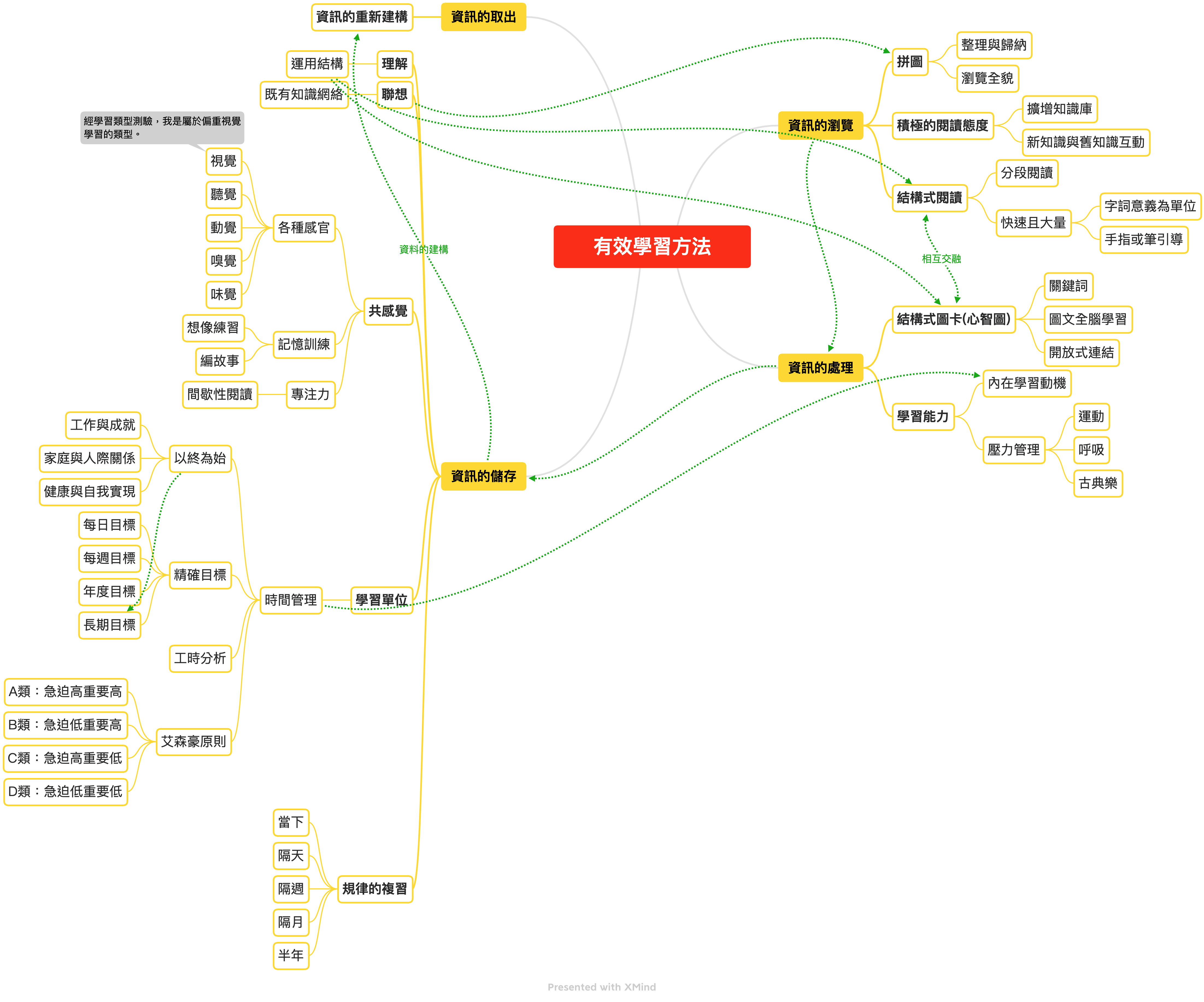
URL:https://xmind.works/share/pXATUFgC
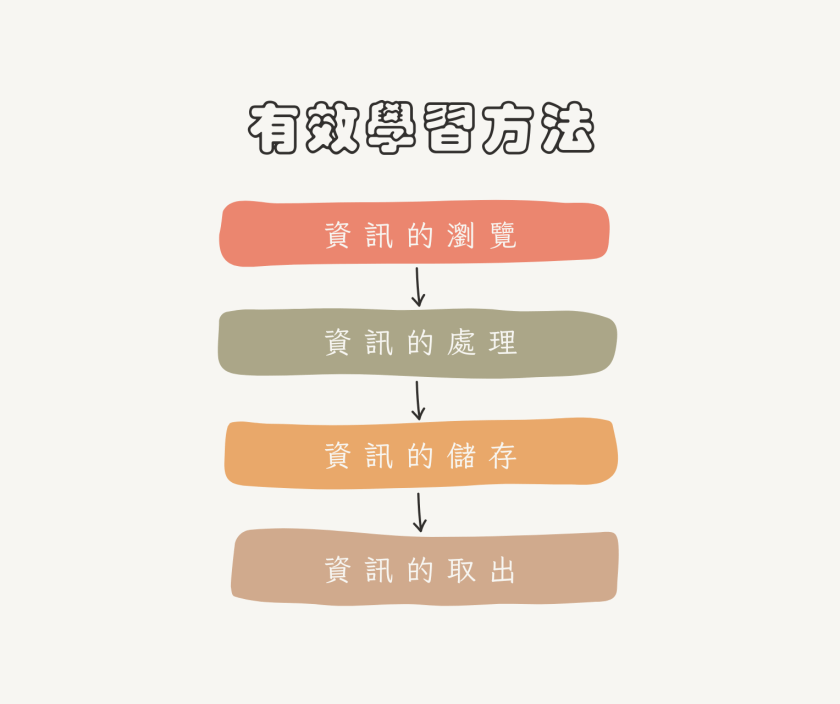
達成三大步驟:正確的瀏覽資訊(結構式閱讀)、正確的處理資訊(心智圖)、正確的儲存資訊(規律複習),便能輕鬆提取大腦的資訊,這就是有效的學習方法。
Achieving three steps: correct information browsing (structural reading), correct information processing (mind mapping), and correct information storage (regular review), can easily extract information from the brain, and this is an effective learning method.
如果你周遭有正要準備考試的朋友,或許可以推薦他先讀這本書掌握學習方法後再準備考試,或許結果大有不同。
If you have friends around you who are preparing for exams, perhaps you can recommend that they read this book first to master the learning method before preparing for the exam, and the results may be very different.
以上英文皆運用ChatGPT Mar 23 Version翻譯,(除了書名)未經任何人為修飾。
The above English translations were generated using ChatGPT March 23 Version and have not been modified by any human.

 遲來的啟蒙 Start From Here Now
有效學習方法 有 “ 1 則迴響 ”